
Malala Yousafzai: The Voice That Refused to Be Silenced
- Sep 4, 2025
- 3 min read
By She Rises Studios

At just 11 years old, Malala Yousafzai began to raise her voice for something she believed every child deserves: the right to go to school. Growing up in the Swat Valley of Pakistan, Malala witnessed firsthand the slow but devastating rise of the Taliban, who banned girls from attending school and sowed fear across her community. For most, silence seemed like the only option—but not for Malala. With a courage far beyond her years, she chose instead to speak out, becoming a symbol of resistance and a global voice for girls' education.
What began as anonymous blog posts for the BBC under a pseudonym soon became national and international attention. Malala, with the unwavering support of her father—an educator himself—publicly advocated for girls’ access to education, appearing in documentaries and giving interviews that challenged the oppressive forces in her region. Her activism was bold and dangerous, and on October 9, 2012, those dangers became horrifyingly real. Malala was shot in the head by a Taliban gunman while riding a school bus home.
The world held its breath.
But Malala did not die. Instead, she survived, endured a long recovery, and emerged stronger—more determined than ever to be a champion for every girl denied an education. Her story captured global attention, not as a tale of tragedy, but as one of unstoppable resilience. She became the youngest person ever to receive the Nobel Peace Prize at age 17. In her acceptance speech, she reminded the world that “one child, one teacher, one book, and one pen can change the world.”
Malala’s advocacy didn’t stop with the headlines. She co-founded the Malala Fund, an organization that champions education access for girls in more than a dozen countries where barriers—whether political, economic, or cultural—stand in their way. Her vision is bold and clear: a world where every girl can learn and lead. Through local partners and global initiatives, the Malala Fund is investing in the future of girls who might otherwise be forgotten, giving them not only books but the belief that they matter.
What makes Malala’s story so powerful is that it transcends borders and ideologies. She is not just an activist for Pakistani girls or for those under Taliban control—she is a voice for millions of girls around the world who are denied opportunity, safety, and dignity because of their gender. From refugee camps in Lebanon to rural villages in Nigeria, her work highlights the interconnectedness of education, empowerment, and justice.
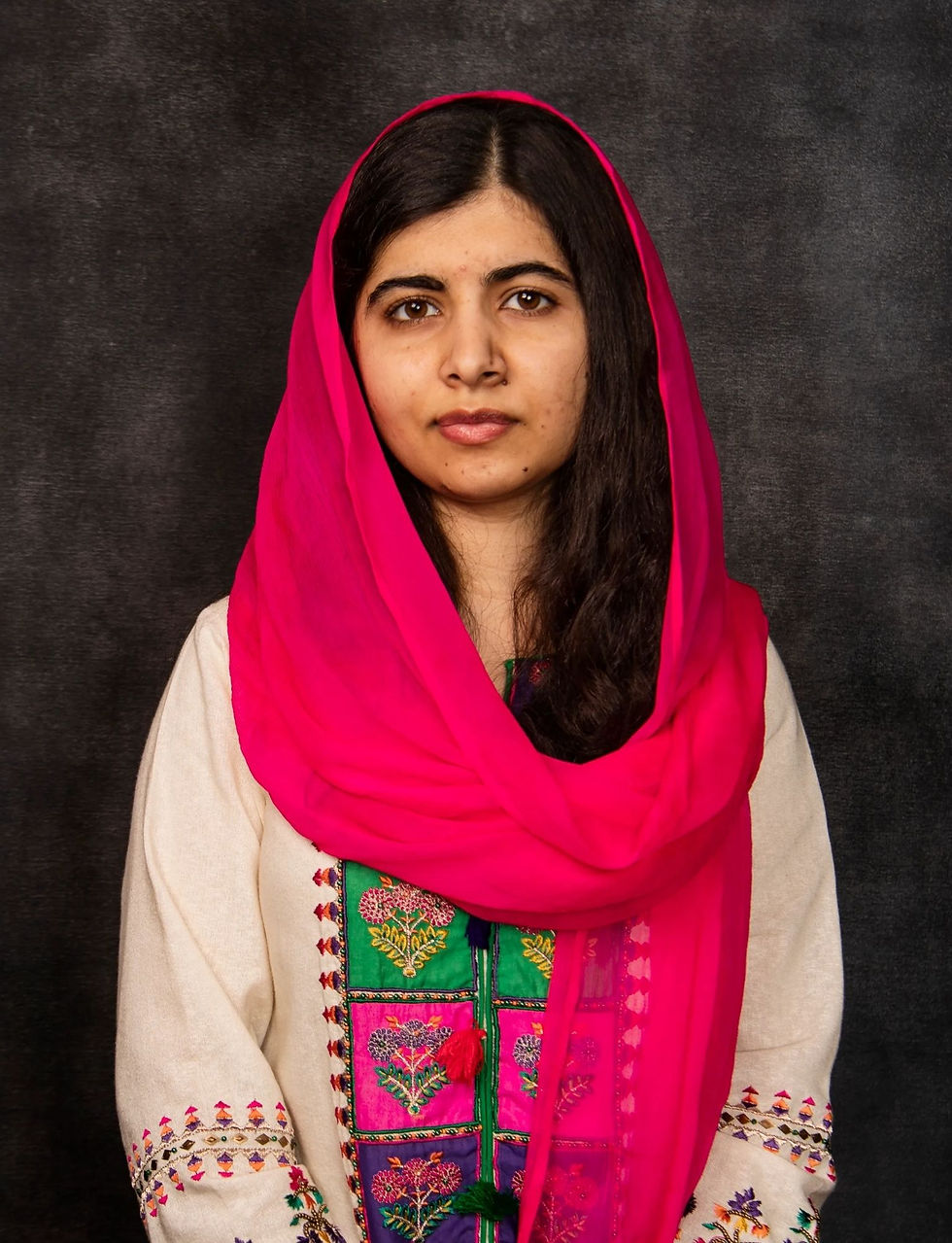
Even as she continues to study—having completed a degree in Philosophy, Politics, and Economics at Oxford University—Malala remains at the forefront of global conversations about gender equality, human rights, and the transformative power of learning. She uses every platform available to her—books, interviews, social media, and policy forums—to advocate for those who cannot yet speak for themselves.
In a world where girls are still fighting for a seat in the classroom, Malala reminds us that knowledge is not a privilege—it is a right. Her courage has shifted the global dialogue, turning attention toward the millions of young women who still face violence, poverty, and systemic oppression when all they want is the chance to learn. And in doing so, she has proven that even the most devastating wounds cannot silence the truth.
Malala’s journey is a living embodiment of this issue’s theme—Rising Together. She has shown that when one girl rises, she brings others with her. Her voice may have once been met with bullets, but today it echoes in the halls of governments, the pages of history, and the hearts of young women everywhere. Her message is unshakable: the pen will always be mightier than fear.
As we honor National Literacy Month, Malala Yousafzai reminds us what’s at stake when girls are denied the right to read and write—and what’s possible when we fight back. Her life is not just a story of survival; it’s a movement of global awakening. Through her unwavering commitment to education, Malala is not only changing lives—she is rewriting the future.


Comments