
Where Truth Is Allowed to Speak: Victoria Cuore and the Architecture of Survivor-Led Podcasting
By She Rises Studios Editorial Team
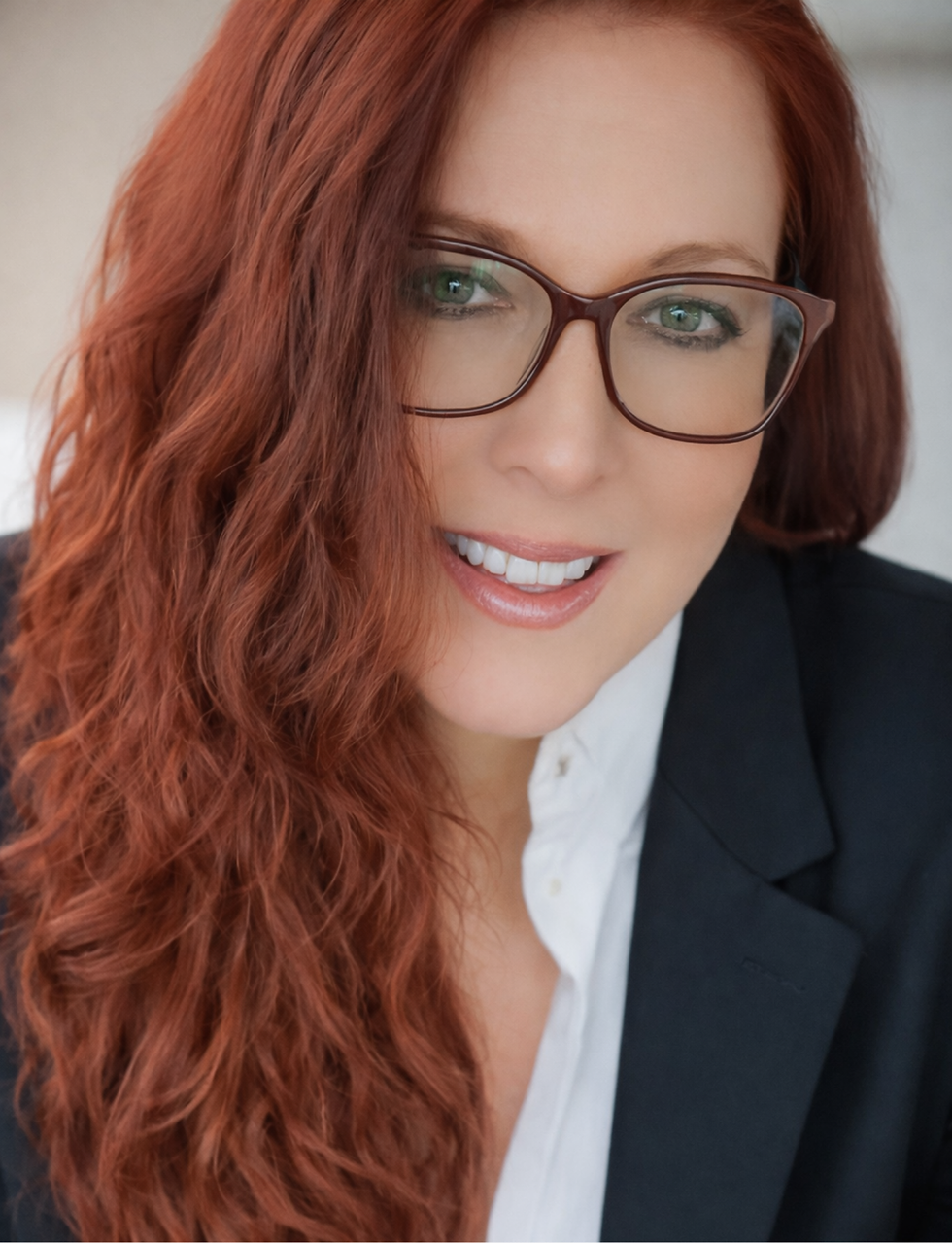
Victoria Cuore did not arrive in podcasting through media training or a desire for visibility. She arrived because it was the first place where her voice could exist without being edited, softened, or reshaped to make others comfortable. For her, podcasting was not a platform. It was refuge. A space where lived experience could be spoken as it actually unfolded rather than compressed into sound bites or repackaged into inspiration.
Other platforms demanded efficiency and performance. They asked for stories of trauma to be shortened, resolved, and made palatable. Podcasting offered something radically different. It offered time. Time to speak without interruption. Time to pause.
Time to breathe through moments where language had not yet fully formed. In that space, truth was not required to be neat or inspirational. It was allowed to be human.
Cuore’s relationship with podcasting is inseparable from safety. Not the theoretical concept often discussed in wellness spaces, but safety as a lived, embodied reality. Her husband stands beside her in this work as a grounding presence, offering belief, steadiness, and unwavering support. His role is not to shield her from the truth of her story, but to strengthen her inside it. That foundation allows her to speak honestly without losing herself and to hold space for others without fragmentation.
From the beginning, Cuore understood that her voice did not need refinement. It needed permission. Permission to be imperfect. Permission to resist performance. Permission to tell the truth without managing the comfort of those who had never lived it. Podcasting provided that permission. Love provided the steadiness to trust it.
The intimacy of audio is what makes the medium sacred to her. Listening is a choice. Someone allows her voice into their private moments while driving, cleaning, or lying awake in the dark. In those moments, she is not addressing an audience. She is sitting beside another human being and quietly affirming that they are not weak, not imagining their reality, and not alone. Podcasting did not simply give Cuore a microphone. It gave her a place where truth could exist without apology.
That same commitment to accuracy led her to build A Contagious Smile and later A Contagious Smile Academy. She created them because the systems she needed did not exist.

Most trauma education, she observed, is written like a post mortem. It analyzes abuse from a distance, after the danger has passed. But survivors living inside harm are not looking for an autopsy. They are looking for a map.
Traditional frameworks often fail to capture the sustained nature of abuse and the constant internal calculations it demands. There is little language for the vigilance, the erosion of self trust, and the cognitive labor required to function while harm is ongoing. Cuore did not need encouragement or platitudes. She needed accuracy. Podcasting allowed her to speak to that gap without dilution, offering nuance and pacing that other mediums could not support.
Audio also enabled private recognition at scale. Listening happens in solitude. No disclosure is required. For people navigating risk, that privacy matters. Truth can land quietly and safely. Through A Contagious Smile on Apple Podcasts, Cuore articulated the realities of prolonged harm as they are lived rather than summarized. From there, everything else was built.
Her shows are known for their raw, unfiltered conversations, but she draws a clear line between honesty and harm. For Cuore, responsible storytelling begins with intent. The question is not how much pain can be shared, but why it is being shared. Performative healing culture demands redemption arcs and silver linings. She rejects that model entirely. Rushing to meaning before harm has been accurately named only reinforces the distortions that trap survivors.
Cuore’s more than one hundred surgeries and decades of systemic harm taught her that inspiration is often a mask for observer discomfort. On the Unstoppable Podcast, trauma is not used for clicks. Language is used as infrastructure. Being unfiltered is not synonymous with being unprotected. Rawness, when intentional, provides listeners with tools rather than spectacle. It gives them language to navigate safety while they are still inside their reality.
As a survivor of both domestic violence and extensive medical trauma, sharing her story out loud transformed Cuore’s relationship with healing. Speaking into a microphone allowed her to externalize pain and view it as data rather than identity. She stopped being a subject of her history and became the author of her future. This shift moved her away from the survivor trope and into the role of a specialist in human endurance.
That evolution reshaped her role as a podcaster. She became an architect of language. She recognized that storytelling alone was insufficient and that education was required to bridge recognition and safety. This insight led to the creation of A Contagious Smile Academy, which now houses more than one hundred courses designed to reflect survivor reality while it is still unfolding.
Cuore’s work does not seek sympathy. It drives change. Sympathy allows listeners to feel without examining themselves or the systems they inhabit. Accuracy removes that distance. Her conversations are designed to move listeners from emotional response into awareness, accountability, and action. Each episode functions as part of a larger curriculum. Recognition is met with tools, language, and pathways forward.
With a top one percent global reach, Cuore understands that amplification carries responsibility. In her view, large platforms require stewardship rather than extraction. Survivor voices are never treated as consumable content. The narrative always belongs to the survivor. The focus remains on strategy rather than spectacle. Awareness without infrastructure is extractive. Every conversation is connected to resources that translate shared experience into practical support.
This trauma informed approach fundamentally differs from traditional interview formats. Rather than extracting narratives for performance, Cuore dismantles the power dynamics of the microphone. Consent is continuous. Boundaries are respected without explanation. Stories are treated as living realities rather than finished products. The human is always prioritized over the content.
International recognition, including being named the Best Transformative Trauma Advocate of 2025, has not shifted her mission toward optics. Visibility functions as leverage rather than validation. It opens doors to challenge outdated frameworks and insist on accuracy in spaces that have historically relied on abstraction. Cuore stays grounded by remembering the unseen listener in the private earbud. If the work does not serve that person, recognition is irrelevant.
Sustaining a bold voice over time, she has learned, requires anchoring rather than fearlessness. Burnout comes from performance, not truth. By refusing to perform healing, she preserves her energy and integrity. Silence, she believes, is far more costly than backlash. Accuracy compounds over time, while outrage burns out.
Looking ahead, Cuore envisions a future where survivor led media is defined by architecture rather than tone. Trauma informed podcasting, in her framework, rests on four pillars. Agency ensures the survivor owns the narrative. Accuracy prioritizes precision over comfort. Containment provides structure so truth does not cause additional harm. Infrastructure connects recognition to movement and safety.
The courses inside A Contagious Smile Academy reflect this same philosophy. They translate lived experience into usable language while harm is still unfolding. Learning is modular, dignified, and non linear. The goal is not transformation as performance, but reclamation as function.

Victoria Cuore is not interested in being the face of survivorship. She is building exits. Through podcasting, education, and infrastructure, she has created a global model where truth is not consumed, but used.
In that space, survivors are not asked to become someone new. They are given the language to recognize who they already are and the tools to move forward.
Connect With Victoria


Comments