
Yvonne Walus:Between Logic and Imagination
By Yvonne Walus

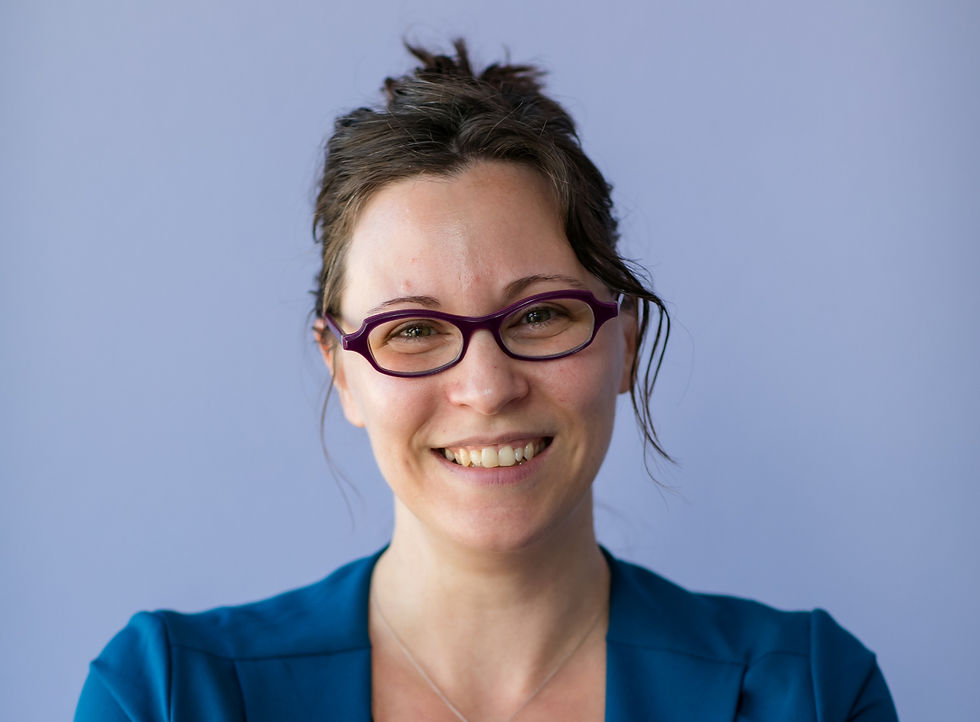
Yvonne Walus is a novelist who defies the common belief that people are either wired for numbers or words. With a doctorate-level background in mathematics and a thriving career as both a business analyst and author, she brings together the precision of logic and the boundless creativity of storytelling. For Walus, mathematics has been more than just an academic pursuit; it has shaped the very way she constructs her narratives. Taking mathematics at a post-grad level taught her to think in a logical way, and that disciplined thinking, ingrained through years of study, ensures her thrillers unfold with tight, coherent structures even when her characters refuse to behave.
Yet the parallels between her professional life in business analysis and her creative life as a novelist are less obvious. In fact, Walus insists there are none. Business data, in her view, is precise, structured, and endlessly obedient. Thrillers, on the other hand, thrive on secrets and unexpected twists. Data points don’t run off in the middle of the night, leave cryptic notes, or betray you halfway through Chapter Eight, but characters might. For her, toggling between the order of data and the chaos of fiction is like playing in two completely different playgrounds: one built of facts, the other of possibilities. It is precisely this duality that fuels her career, offering satisfaction in both clarity and mystery.
Walus’s voice as a writer is deeply rooted in her global journey. Born and raised in communist Poland, she learned early that rebellion often came in the form of words. Writers cleverly layered meaning into their work, crafting stories that appeared compliant on the surface but, beneath, carried sharp critiques of the system. That lesson in subversion left its mark on her storytelling. Her move to South Africa during apartheid further complicated her worldview. There, she learned to see how drastically reality can shift depending on perspective, and how privilege shapes outcomes. Later, in New Zealand, she found space and clarity a grounding environment where her ideas could stretch without constraint. Each country left its imprint: Poland gave her resistance, South Africa gave her empathy, and New Zealand gave her freedom. Her narrative voice, she says, ended up rooted in history, layered by complexity, and eternally hopeful.

Although best known for her crime fiction, Walus actually began her career with speculative science fiction by accident. Living in South Africa in the 1990s, she stumbled upon a writing competition that called for a science fiction short story. With little experience in the genre but an undeniable hunger to write, she entered. To her delight, her story was short-listed. She entered again the following year, and the year after that, eventually winning the competition three years in a row. Despite that success, Walus’s heart was drawn to mysteries. An avid reader of murder fiction, she always knew she would eventually find her home in crime. Over the years, she published five crime novels before revisiting her speculative roots. Her upcoming release, Welcome to Perfectville (2026), asks unsettling “what if” questions: What if a group of people attempted to build paradise on earth? What if the next generation found that perfection unbearably dull and longed for escape? For Walus, crime and speculative fiction are not so much separate categories as they are variations of the same impulse: to explore human behavior under pressure. Perhaps one day, she muses, she will write a perfect blend of the two genres.
Balancing her many roles is both a challenge and a source of inspiration. By day, she works in business analysis. Evenings belong to family preparing meals, sharing dinner, and catching up on life. Then, when the house settles, she retreats to her writing desk. That is the ideal, of course. Some nights, like all writers, she admits exhaustion wins and the television beckons. But even in the busyness of life, family, work, pets, friends she finds the wellspring of her creativity. All that busy time, she says, feeds her creativity, and she is grateful for how full her plate is.

In addition to writing, Walus serves as the editor of With Indie, a bi-monthly staff magazine for Australian schools that support students who learn differently. Choosing the content for each issue is, she says, profoundly fulfilling. Every edition feels like a celebration of the creativity and dedication involved in making education accessible. She also tutors and mentors emerging writers, a role she describes as equally rewarding. Helping others gain confidence in their own voices and watching them grow into their craft brings her a joy akin to finishing one of her own novels.
Of all her works, The Wrong Girl holds a special place in Walus’s heart. Inspired partly by her daughter, who was about the same age as the protagonists during its creation, the novel explores the challenges modern teenagers face identity, labels, cliques, and exclusion. She set the story in an exclusive boarding school for troubled girls, where internet access was limited, research was done with paper books, and phones were restricted to an hour each evening. By stripping away the constant digital connection, Walus asked how Gen Z would cope with timeless struggles in a setting reminiscent of earlier decades. The result resonated powerfully with readers. In 2025, The Wrong Girl achieved bestseller status in both the USA and Australia, appearing in Kindle Best Sellers categories including Women’s Detective Fiction, Women’s Crime Fiction, and Women’s Psychological Fiction. For Walus, seeing her novel reach so many readers was one of the most affirming moments of her career.
Walus is a writer unafraid of multiple genres and forms, yet she acknowledges that switching between them is not always easy. Short stories, in her view, are an entirely different craft from novels. A short story demands precision, zooming in on a single idea or turning point without room for sprawling subplots. Novels, by contrast, allow for layers, multiple threads, and worlds that breathe. When working on a novel, she deliberately avoids short prose, preferring to immerse herself fully in the demands of long-form storytelling. Genres, however, pose no such obstacle. She can switch between crime and speculative fiction with ease, because for her, the heart of any story lies in the characters. Whether they fall in love, commit murder, or colonize Mars, it is the human element that drives her work.

Walus knows firsthand that the path to publication is not without hurdles. Her advice to aspiring authors is simple yet profound: persistence is everything. Keep writing, keep learning, and don’t let rejection tell you when your story is finished. Focus on the things you can control: your craft, your resilience, and your love of storytelling. She emphasizes that the publishing industry is ever-changing and often unpredictable. Trends rise and fall, outcomes can’t be guaranteed, and rejection is unavoidable. But the writers who succeed are not necessarily the most talented, she insists—they are the ones who refuse to stop, no matter how many times rejection knocks at their door.
In Yvonne Walus, the worlds of mathematics, business analysis, and storytelling converge in unexpected harmony. She is equally at home in the logical landscapes of numbers and the unpredictable terrain of narrative twists. Her global experiences, her curiosity about human behavior, and her passion for supporting others have made her voice distinct and layered. As she continues to explore both crime and speculative fiction, she stands as proof that creativity thrives not in choosing one path, but in embracing the richness of many. For Walus, life itself—with all its structure and all its chaos—is the greatest source of story.
Connect With Yvonne


Comments