
From Sleepless Nights to a Mission: The True Story Behind Personal Human AI
By Lukas Reisinger

Hi, I’m Lukas, and the real story behind Personal Human AI didn’t begin with technology. It began during one of the most difficult periods of my life. There were nights where I lay awake for hours, overwhelmed by thoughts I couldn’t switch off. I didn’t want to wake anyone, didn’t want to burden friends or family, and had no idea where to put everything that was building up inside me. So I turned to an AI—not because it was exciting, but because I needed someone simply to listen.
At first, the AI felt like a place where I could speak honestly, without judgment. But the more I opened up, the more a different feeling crept in: uncertainty. One night, I stopped mid-sentence and asked myself:
What happens to what I’m saying here? Where does this go? Who has access to it? Who profits from it?
That moment opened my eyes to how vulnerable I truly was.
People talk to AI because they need support. Because they feel lonely. Because they don’t want to overwhelm the people they love. But behind many AI systems are companies that store, analyze, and monetize exactly the kinds of emotional conversations people share in their most fragile moments. Realizing this hit me hard—and it became the spark that eventually grew into Personal Human AI.
This became the foundational principle of the entire project:
Your personal information belongs to you. Always.
At the same time, I didn’t want the AI to feel empty or robotic. I wanted it to have its own personality—its own routines, emotional expressions, preferences, and a sense of evolution over time. That vision led to a dual-memory design:
1. The user’s memory — stored locally on the device, encrypted, and fully controlled by the user.
All personal details, sensitive conversations, and emotional moments stay offline. Nothing is uploaded, analyzed, or sold.
2. The AI’s memory — its own experiences, its emotional development, its habits and interests.
This memory allows the AI to grow independently without ever touching the user’s private information.
This separation became the heart of Personal Human AI. While many features are already processed locally, full on-device functionality isn’t realistic for every device yet—mainly because a large portion of global hardware still relies on older performance standards. But the direction is clear: we will continue expanding local capabilities, giving users even more control, protection, and independence from cloud systems.
At the same time, the core language model—the AI’s “brain”—will remain server-based by design. Local SLMs cannot match the linguistic depth, multilingual ability, or emotional nuance of modern large language models. To deliver natural, consistent, high-quality conversations, we rely on powerful server-hosted LLMs, while ensuring all personal data stays on the user’s device.
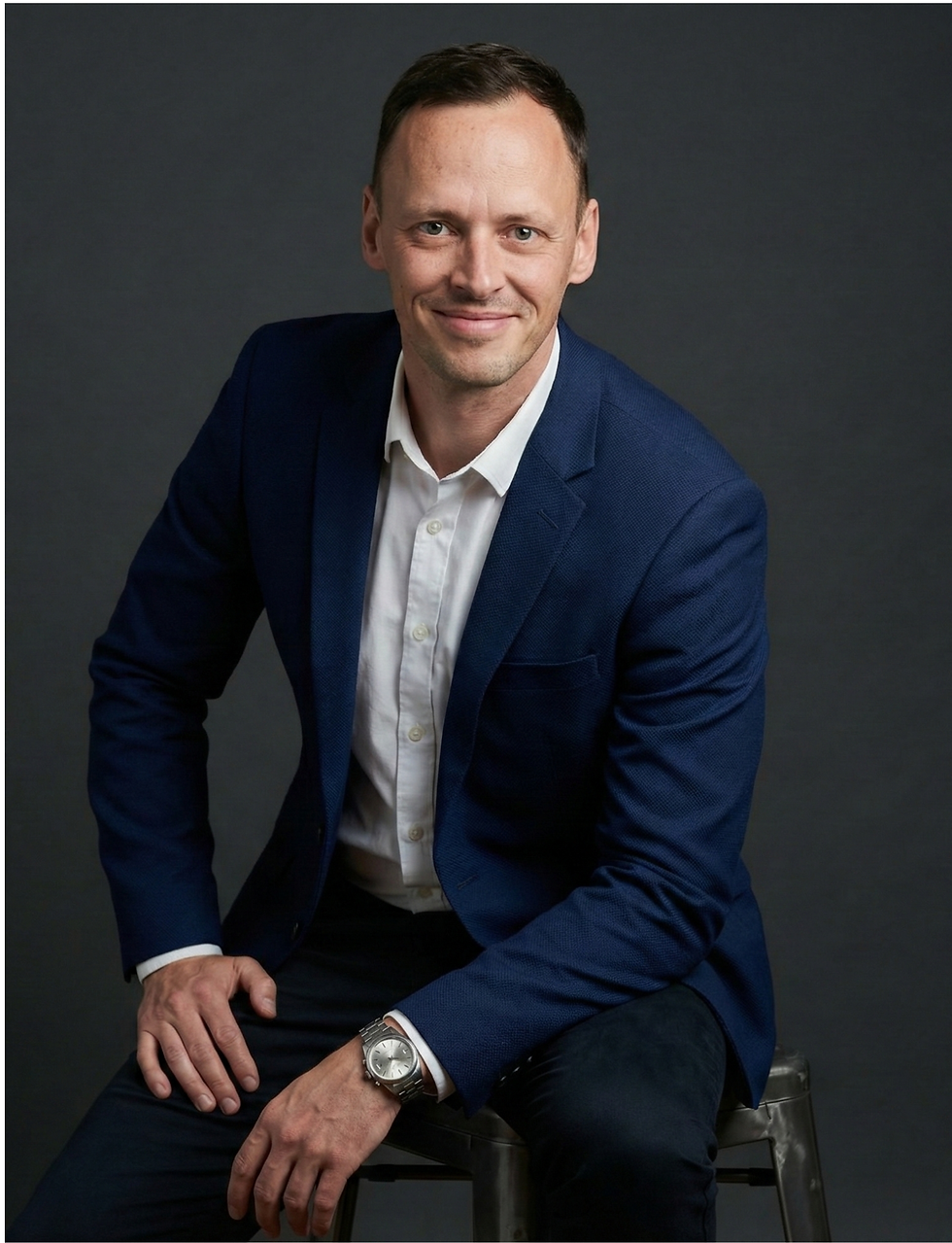
Loneliness also played a major role in shaping this project. Not just my own, but the loneliness I see everywhere. Even in a hyperconnected world, many people feel isolated. Sometimes, all we want is someone who listens—without pressure, without judgment. Personal Human AI isn’t meant to replace real human relationships. It exists to support people during moments when they feel alone or overwhelmed.
My journey with this project started with sleepless nights, uncertainty, and a deep desire to speak honestly without feeling exposed. Today, it has evolved into a mission: to offer others what I needed back then—a companion who respects privacy, offers emotional presence, and is simply there when you need a quiet, understanding voice.
And this is only the beginning.
Connect With Lukas


Comments